Quick answer
The right vacuum sewer truck is the one that can complete your work, carry the load safely and reach the disposal point without creating a new operating problem. Start with the material and the job site. Then decide whether you need suction, high-pressure jetting or both. Only after that should you compare tank capacity, pump performance, hose and reel, discharge equipment and chassis limits.
This approach is more useful than choosing the largest tank or the highest pressure number. The final vehicle must still be confirmed for the exact model, destination and operating conditions.
1. Describe the work before choosing equipment
Sewer and drainage work can involve sanitary lines, storm lines, catch basins, lift stations, wet wells or lateral lines. The material may be liquid sewage, sludge, sediment, grease, roots, stones, leaves or mixed debris. The same truck will not be equally suitable for every combination of material, distance and access.
Before requesting a quotation, write down:
- what material must be removed;
- whether the main job is extraction, pipeline cleaning, drainage or a combination;
- the pipe, basin or wet-well dimensions;
- how far the vehicle must travel between collection and disposal;
- where loading, water filling, unloading and cleaning will take place.
These details show whether the main constraint is water, debris, vacuum reach, hose length, discharge access or road access.
2. Choose the equipment class
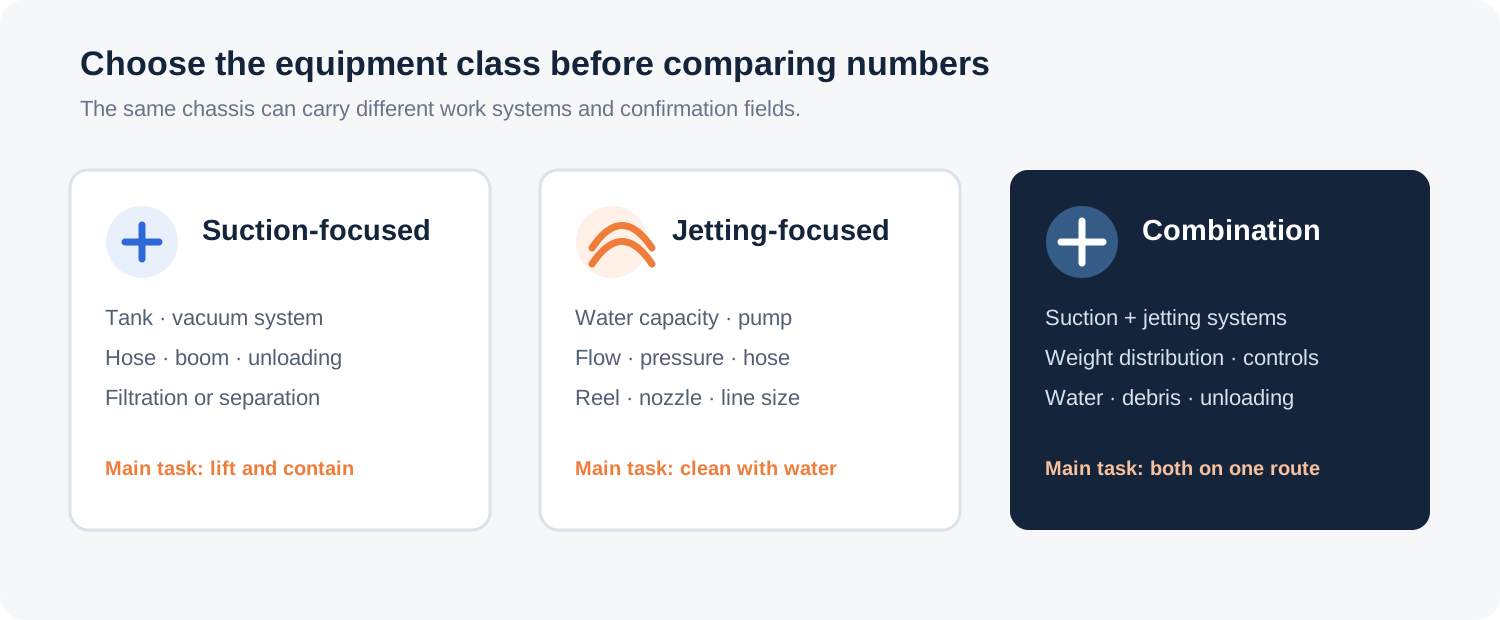
Suction-focused vehicle
A suction-focused vehicle is built around lifting and containing material. The quotation should identify the vacuum system, debris or sewage tank, hose diameter and length, boom support, filtration or separation method and unloading arrangement. If a vacuum rating, blower type or hose specification is not documented, keep it as a supplier confirmation item.
Jetting-focused vehicle
A jetting vehicle is built around water, pump flow, pressure, hose, reel and nozzle selection. These values work together with the pipe size, blockage, cleaning distance and duty cycle. Pressure by itself does not tell you whether the vehicle will do the job. Public equipment specifications commonly separate water capacity, hose capacity, hose size, dimensions and axle configuration, which are the fields a buyer should request together.
Combination vehicle
A combination cleaner carries out suction and jetting work on one chassis. This can reduce the need for separate vehicles, but it also makes weight distribution, water capacity, debris capacity, pump controls, vacuum selection and unloading more important. Ask the supplier to describe how the two systems operate together on the exact proposed chassis.
3. Compare capacity with payload and route
A quotation should distinguish nominal capacity from usable or effective capacity whenever the source provides both. TruxSpec records also show why total tank volume and effective working volume should not automatically be treated as interchangeable.
For a combination vehicle, request separate figures for debris capacity and clean-water capacity. Then compare those figures with:
- the expected collection volume per shift;
- the density and weight of the material;
- the vehicle’s curb weight and rated payload;
- axle loads and wheelbase;
- the distance to the disposal point;
- local road, bridge and site limits.
A larger tank may reduce the number of disposal trips, but it can also leave less payload margin or make access difficult. The useful comparison is the complete loaded vehicle, not the tank number on its own.
4. Specify the equipment that affects the work
For the selected equipment class, ask the supplier to state the fields that will affect daily operation:
- pump flow and pressure;
- vacuum rating and blower or pump type;
- hose diameter, length and reel arrangement;
- nozzle or suction-tool options;
- boom reach and discharge method;
- water, debris and effective working capacities;
- tank material, filtration and separation;
- cleaning, filling and unloading arrangements.
Do not fill missing values with typical industry numbers. A missing field should remain visible as a question for the supplier. Model-specific figures from public equipment pages are useful examples of what to ask for, but they are not universal design requirements.
5. Check the chassis and operating site
The body and equipment may be suitable on paper but unusable at the actual site. Confirm:
- overall length, width and height;
- wheelbase, turning space and ground clearance;
- axle configuration, axle loads and rated payload;
- access to manholes, basins and wet wells;
- hose and boom reach from the parking position;
- water supply, waste discharge and wash-down locations;
- road, bridge, slope and destination restrictions.
Ask for the loaded dimensions and axle information, not only the unladen vehicle data.
6. Keep industrial vacuum loading separate
Industrial vacuum loaders may be designed for dry materials, liquids, hydro-excavation or deep removal. That equipment class can have very different debris boxes, vacuum systems and blower ratings from a sewer-cleaning or jetting vehicle. Confirm the intended class before comparing specifications; industrial vacuum figures should not be copied into a sewer-cleaner quotation.
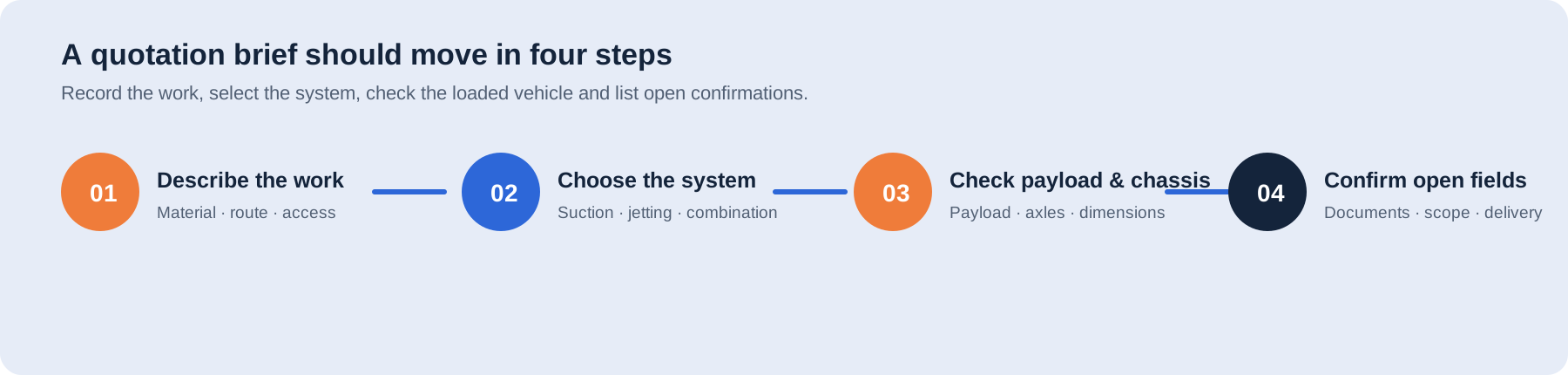
7. Prepare a quotation brief
Send the supplier a short operating brief containing:
- the material and approximate collection volume per shift;
- suction-only, jetting-only or combination requirement;
- pipe, basin, wet-well or surface-cleaning dimensions;
- target debris, tank and water capacities;
- pump flow and pressure range, vacuum rating and hose/reel requirements;
- chassis, payload, axle, wheelbase and road constraints;
- loading, unloading, water filling, cleaning and disposal conditions;
- required documents, inspection points, delivery scope and service assumptions.
Ask the supplier to return the exact model, effective capacity, equipment list, chassis configuration, source specification pages and every field that remains to be confirmed.
Safety and local requirements
Confined-space entry, atmospheric hazards, wastewater handling and disposal rules vary by jurisdiction. OSHA 1910.146 is a United States general-industry standard for permit-required confined spaces; it is not a global vehicle or sewer-cleaning rule. Confirm the procedures that apply at the destination with the responsible employer, authority and qualified safety professional.
Buyer checklist
Before comparing quotations, make sure every supplier has answered the same questions:
- What work and material is the vehicle intended to handle?
- Which capacity is nominal, and which is usable or effective?
- What are the pump, vacuum, hose, reel, nozzle and discharge details?
- What are the loaded dimensions, axle loads, payload and wheelbase?
- How will filling, cleaning, unloading and disposal work at the destination?
- Which values come from the exact model source page, and which still need confirmation?
TruxSpec helps organize documented vehicle configurations and turn the operating brief into a comparable quotation request. The supplying factory must confirm the final vehicle, documents, contract, delivery terms and after-sales responsibilities before an order is placed.